Youth Day Discussion on Gender Responsive Health Systems
Published on September 18, 2024
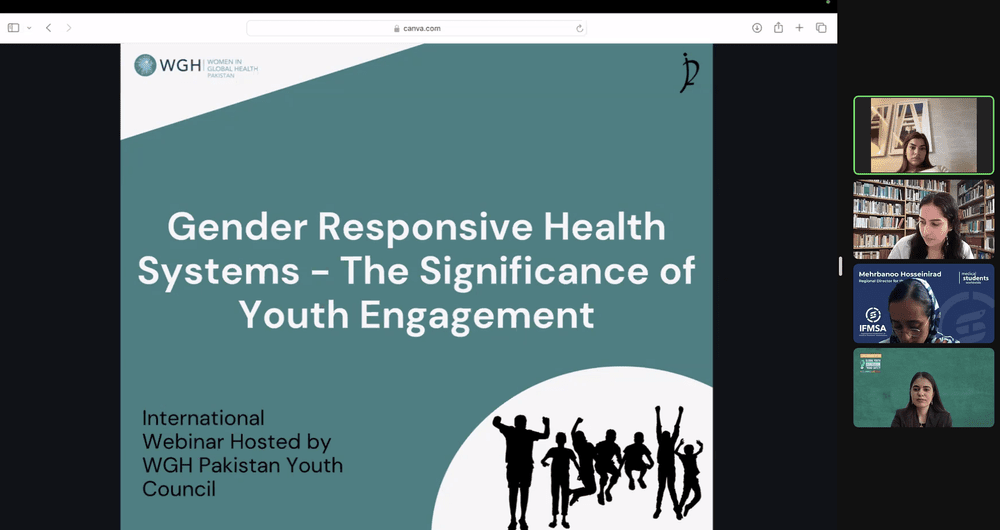
20 August 2024 - The Women in Global Health Pakistan led a session on Gender Responsive Health Systems: The Significance of Youth Engagement to talk about the role of youth voices in creating better health policies around the world.
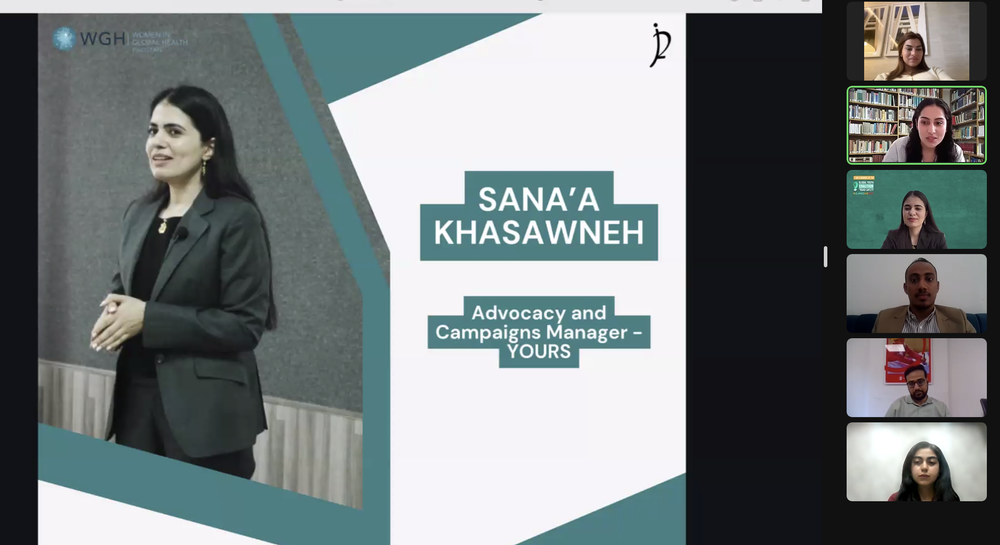
The webinar invited different high-level speakers to provide insights on why youth need to be meaningfully included in decisions that impact their health and way of living. These speakers include; Vice President of the Oxford Pakistan Society Mīnahīl Saqīb, Co-Founder of Pan Arab Women Physicians Association (PAWPA) Rahaf Akroush, CEO of Sanad Team for Development Yaman Alsabek, YOURS - Youth for Road Safety Advocacy and Campaigns Manager Sana’a Khasawneh, Managerial Director of Arab Youth Sustainable Development Network (AYSDN) Musheer Alsharabī, Vice Chair of the World Health Organisation Youth Council Hamaīyal Sana, and Healthcare Programme Coordinator of Save the Children Mohamed Elzemety.
Among the topics discussed were how young people were a force to draw in more youth into the cause. According to Hamaīyal, engaged youth are more likely to raise awareness on health programmes. Adding to this, engaging youth was identified to be a great building capacity for decision-making and will benefit current policy development and prepare next generation of leaders in society.
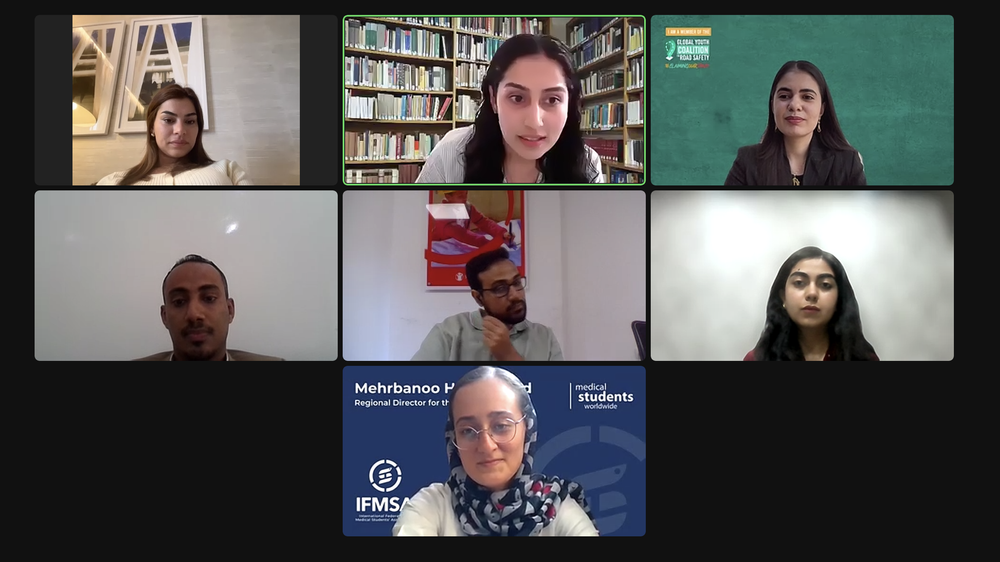
Speakers also raised the fact that governments often want to engage with youth but often “don’t know how”.
“We should educate people on decision-making and include opportunities for young people to get involved in structures like Model UN for [youth] to get international exposure international. We also need to invest in opportunities and in how these opportunities are dispersed” - Hamaīyal Sana
Among other topics discussed was the proficiency of today’s youth when it comes to navigating digital spaces. "Digital platforms are much more than that - youth have a lot of skills we can leverage for policy development, especially in terms of data and development. Through these, we can make policy data available online and enhance transparency between governments and youth groups"