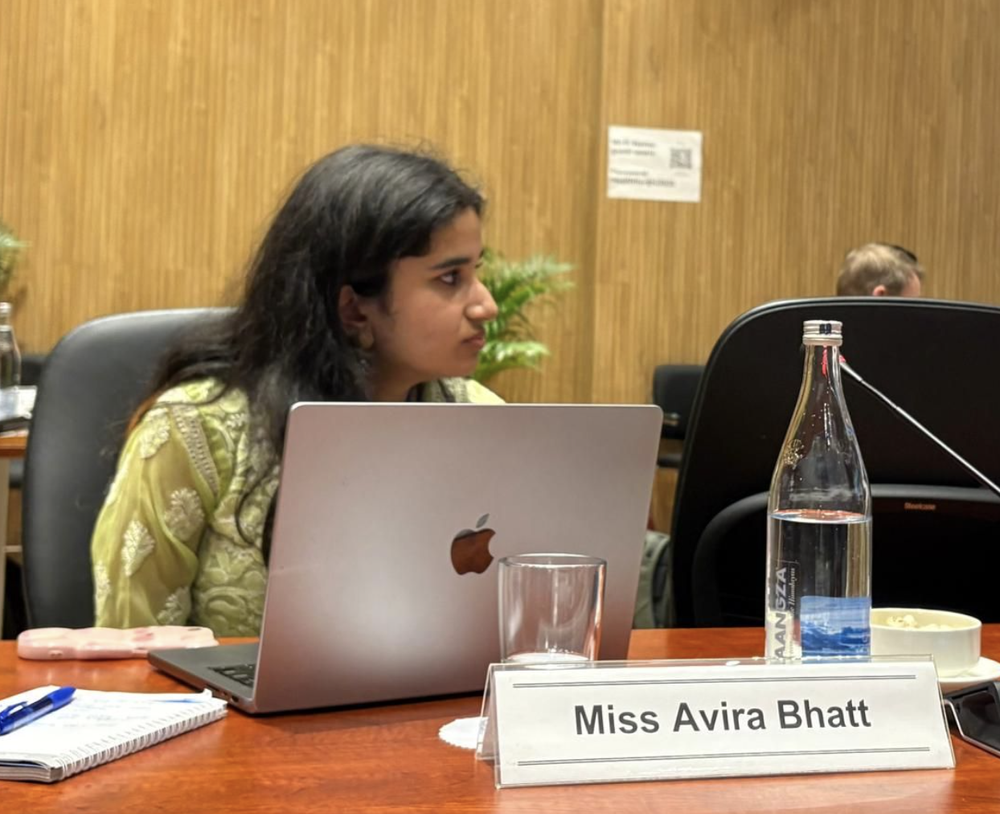
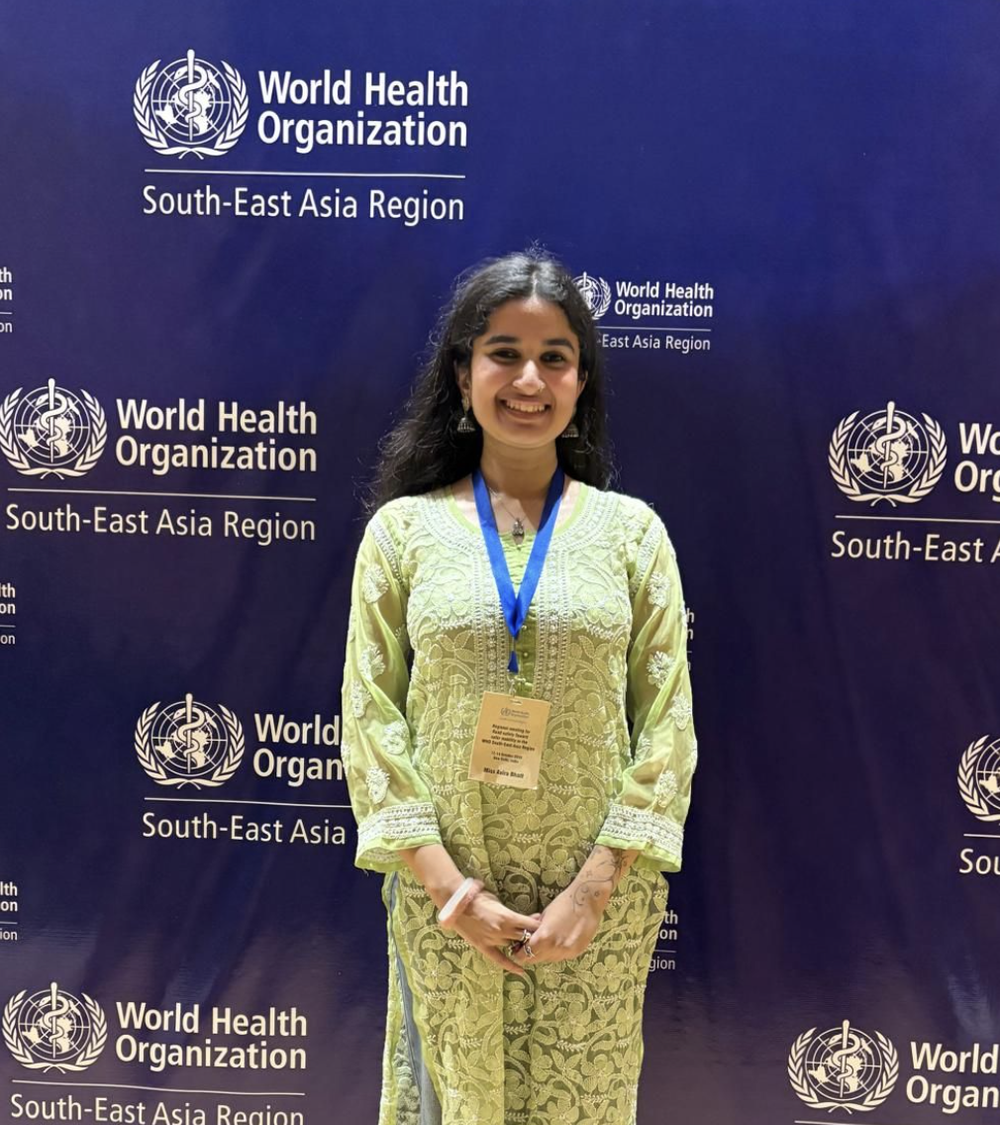
On the WHO stage: Avira puts youth voices on South-East Asia's road safety agenda
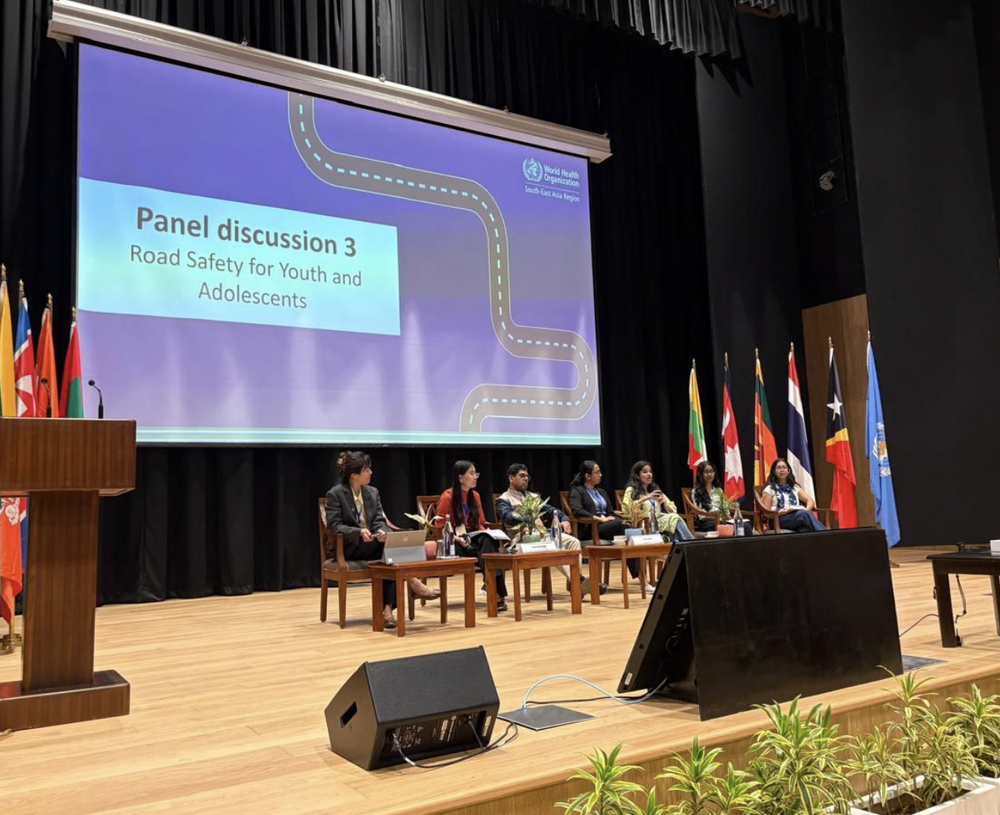
In October, Avira Bhatt, the Global Youth Coalition for Road Safety's Regional Leader for South Asia, took the mic at the WHO Regional Meeting on Road Safety in New Delhi, sharing a youth perspective with ministries, UN agencies and road safety leaders from across South-East Asia.
From 12 to 14 October 2026, the World Health Organization's South-East Asia Regional Office brought together health and transport ministries, national road safety lead agencies, traffic police, experts, United Nations and development partners, non-governmental organisations and youth representatives under the theme "Towards Safer Mobility in the South-East Asia Region". Coming three months after the UN High-Level Meeting on Improving Global Road Safety, the meeting focused on turning commitments into national action: stronger lead agencies, better data, evidence-based laws, sustainable financing and improved care after a crash. In the audience were WHO staff who lead road safety work in country offices across the region, the people who help turn regional plans into national action.
A youth panel in a room of decision-makers
Avira spoke on the panel "Road Safety for Youth and Adolescents", alongside Thanuri Somasiri from Sri Lanka, a member of the WHO South-East Asia Region Youth Council, and speakers from Bhutan's Ministry of Health, UNICEF, WHO and civil society. Her participation came through YOURS, which has been working with the WHO regional team to bring youth perspectives into regional road safety discussions.
Before the meeting, Avira shared what the opportunity meant to her:
"It's an incredible opportunity to bring the youth perspective into conversations on making our roads safer and mobility more inclusive."
According to the WHO organising team, Avira delivered powerful messages and stories to the member states and participants in the room, and the panel received many questions from an audience keen to learn more about youth engagement in road safety.
Grounded in action at the local level
Avira's voice at the regional level is built on work closer to home. Earlier this year, she co-led a Coalition workshop for 120 students at Shiksha Bharti Public School in Gurugram, together with fellow Regional Leader Shivani Khurana and the Raahgiri Foundation. In August, she spoke at a Raahgiri Foundation webinar on child-friendly school zones for International Youth Day, sharing what the everyday commute looks like from a student's point of view.
That experience matters in rooms like this one. Road traffic injuries remain the leading cause of death for children and young people aged 5 to 29, and the people who travel to school and work on these roads every day bring knowledge that data alone cannot capture.
Youth voices where decisions are made
Avira's participation shows what the Coalition works towards: giving young people the knowledge, skills and confidence to speak directly to the people who shape policy. As governments across South-East Asia move from commitments to delivery, voices like hers help make sure that plans for safer mobility reflect the realities of the young people they are meant to protect.
The meeting also marked another step in a growing collaboration between YOURS and the WHO Regional Office for South-East Asia, one that keeps opening space for young people in regional road safety conversations. Special thanks go to Dr Tashi Tobgay, WHO Regional Adviser for Disability, Injury Prevention and Rehabilitation, and Teeranee Techasrivichien for championing youth voices in the region and making room for Avira and Thanuri on the programme.